Back
House of the Dragons
Modernist building with dragon decorations on its facade.
15 - 20 minPhotographyWalk
Why visit?
A must for lovers of architecture and urban photography.
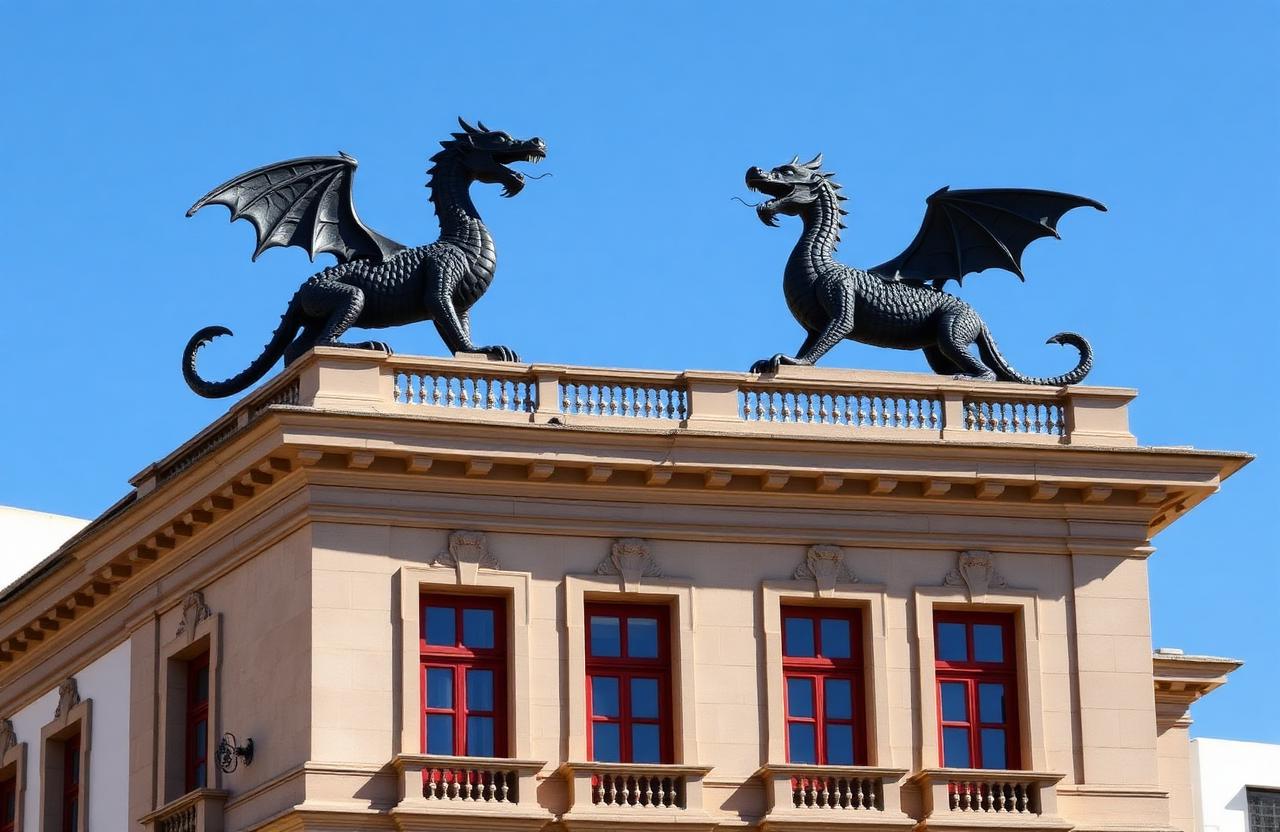
One of the most photographed buildings in Ceuta. Its facade with four dragons makes it a symbol of the modern city.
History and heritage
The House of the Dragons, historically Casa Cerní, stands on the corner of Calle Millán Astray and Paseo de Camoens, next to Plaza de los Reyes. It was commissioned by brothers Francisco and Ricardo Cerni González and designed by Valencian architect José María Manuel Cortina Pérez. Local sources date the start of works to 1897, while studies of Cortina place the main construction in 1904–1905, so it is best seen as a turn-of-the-century building. The original dragons on the roof were lost; they were restored in 2006, and the building underwent a full rehabilitation between 2006 and 2021.
What to see: unique details
- ◆The four dragons crowning the roof, the feature that names the building and makes it recognisable from afar.
- ◆The corner composition, designed to be admired from both streets.
- ◆The richly ornamented historicist façade.
- ◆Its place in the turn-of-the-century townscape, alongside other central buildings such as the Edificio Trujillo.
Audio guide
~1 min 14 s
Look up: four dragons are watching you from the roof of this building. You are in front of the House of the Dragons, one of the most photographed buildings in Ceuta. Its historic name is Casa Cerní, after the brothers Francisco and Ricardo Cerni González who commissioned it, and it was designed by the Valencian architect José María Manuel Cortina Pérez. Its date has a little story of its own: local sources place the start of works in eighteen ninety-seven, while studies of its architect put the main construction in nineteen-oh-four and nineteen-oh-five. So it is a building born at the end of the nineteenth century and completed at the start of the twentieth. Notice how it handles the corner, open at once to Paseo de Camoens and Calle Millán Astray, and the decorative richness of its historicist façade. The original dragons were lost at one point. The ones you see today were put in place in two thousand six, at the start of a full restoration that lasted until twenty twenty-one. A tip: cross to Plaza de los Reyes and look from there, where the whole ensemble is best appreciated.
Audio guide played with your device voice (browser speech synthesis).
Practical tips
- •View it from Plaza de los Reyes to see the dragons and the full corner.
- •Mid-afternoon light is best for photographing the façade.
- •It is a private building: admire it from the street.
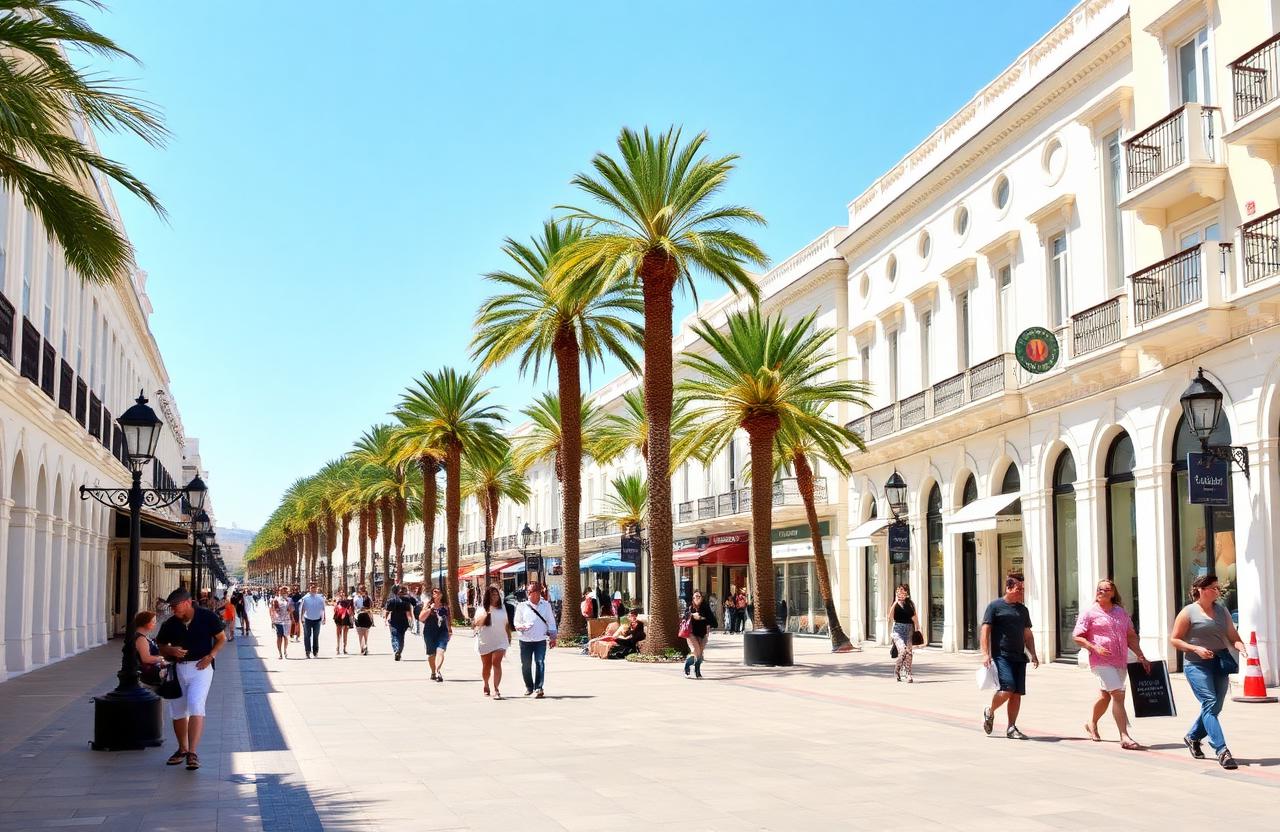
- •Combine it with Paseo del Revellín and Plaza de África, a few minutes away.
Not sure what you're looking at?
Snap the building, dish or detail with Discover Lens and I'll explain it.