Back
Late Roman Basilica
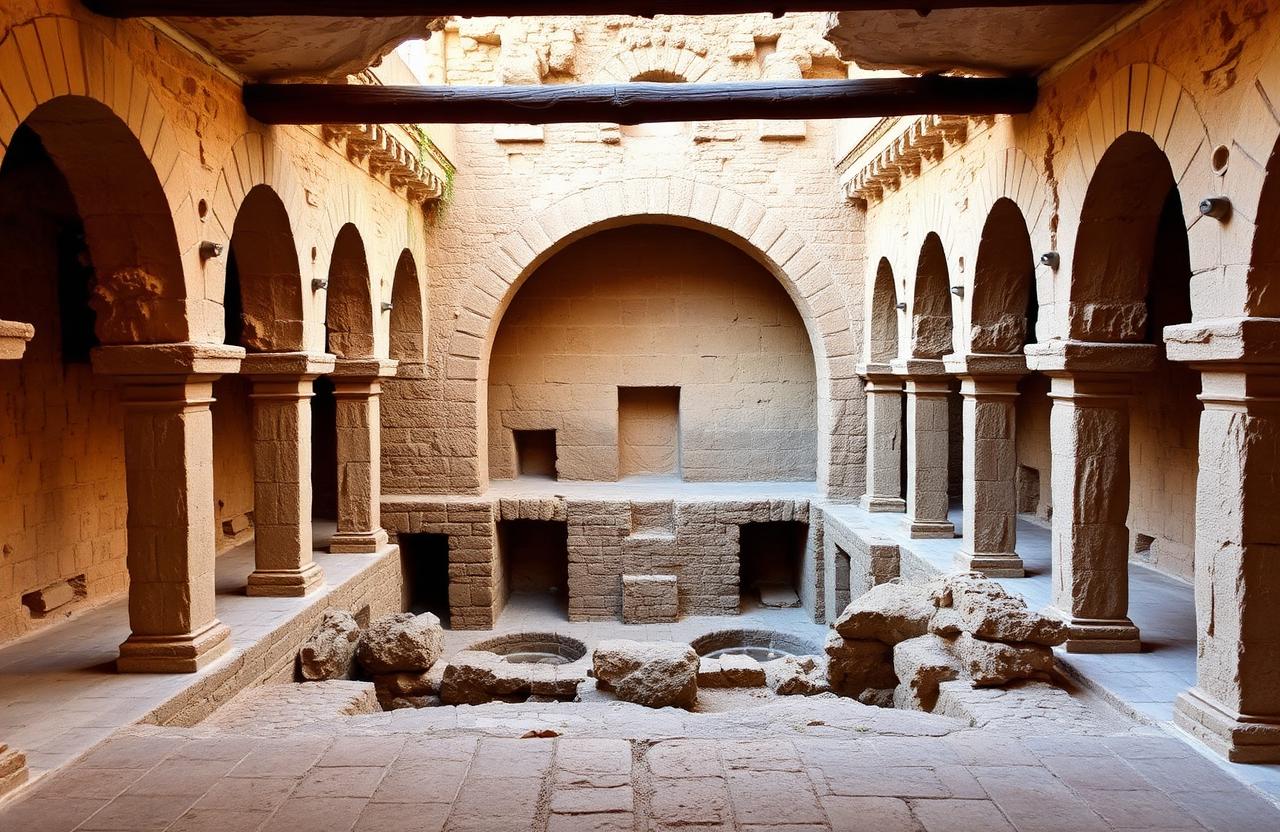
Remains of an early Christian basilica from the late 4th or early 5th century, with its necropolis, inside a museum.
45 min - 1 hHistoryCulture
Why visit?
See Ceuta's Christian origins in situ and follow the history of the isthmus up to 1415.
On Calle Queipo de Llano, right on the isthmus, a modern museum protects the foundations of an early Christian basilica and the necropolis beneath it: one of the few testimonies of early Christianity in the far west of North Africa.
History and heritage
The basilica was built in the late 4th or early 5th century AD, outside the walls of the Roman town. Its remains were discovered in 1987 by Emilio Fernández Sotelo, and in 1991 the site was declared a Site of Cultural Interest as an archaeological zone. A museum designed by architect Javier Arnáiz Seco, opened in 2006, was built around it. Its plan follows the North African basilica model: rectangular, with three naves and an apse facing south rather than towards Jerusalem as was usual. Its exact function is still debated: the excavator noted walls that seem unfinished and tombs at different heights, and some researchers suggest "ad sanctos" burials near the apse. These are hypotheses, not proven facts.
What to see: unique details
- ◆The lower walls of the basilica and its south-facing apse.
- ◆The necropolis beneath, with tombs at different levels.
- ◆The museum rooms, tracing the history of the isthmus from its origins to the Portuguese conquest of 1415.
Practical tips
- •It is on Calle Queipo de Llano, a few minutes' walk from Paseo del Revellín.
- •The City of Ceuta publishes opening hours on ceuta.es; check before you go.
- •Combine it with the Museo de Ceuta on the Revellín to complete the archaeology route.
Not sure what you're looking at?
Snap the building, dish or detail with Discover Lens and I'll explain it.